
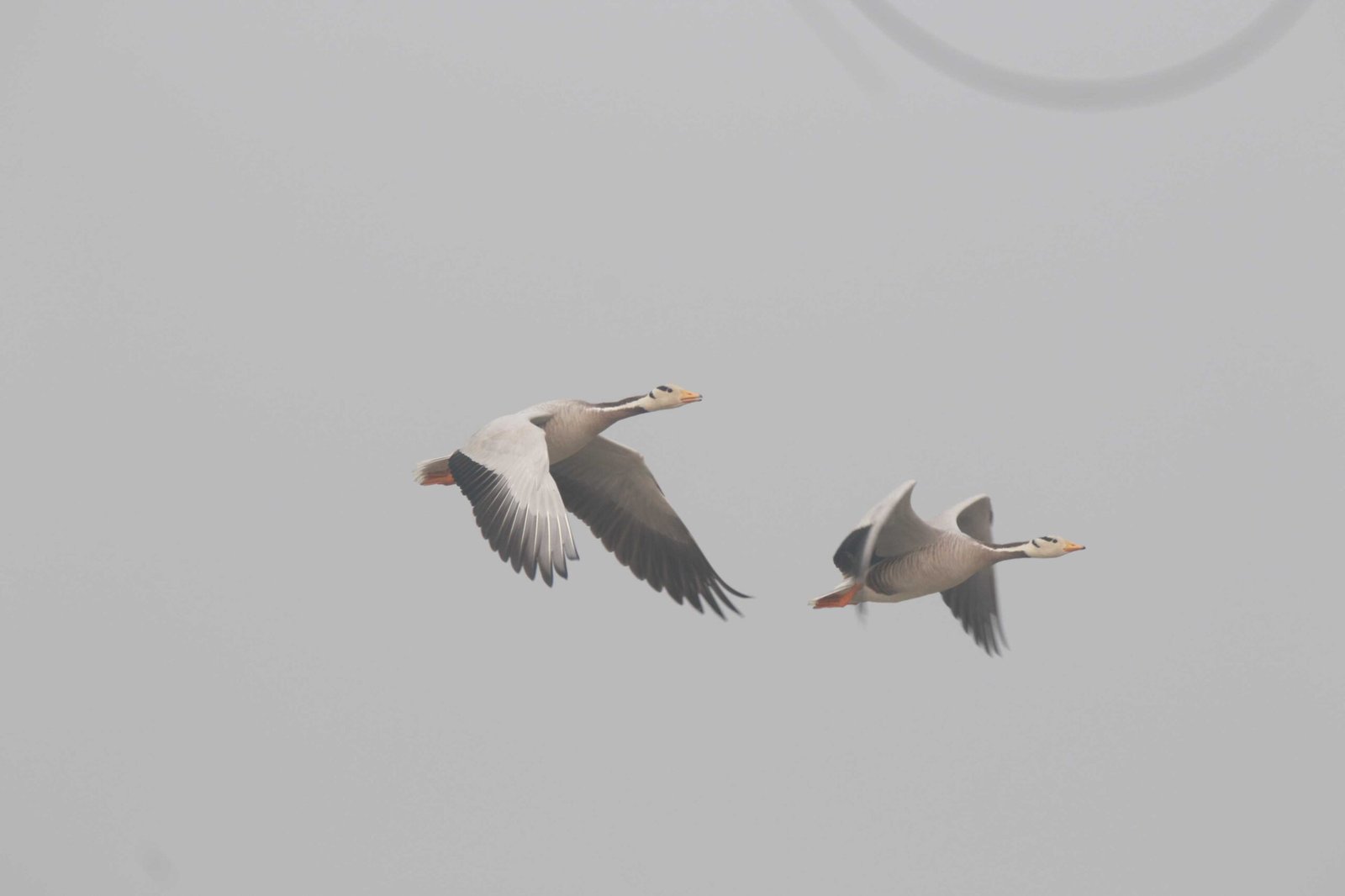
The agricultural wetlands surrounding Janakpurdham continue to reveal their quiet ecological richness. During a recent field visit to the Dhansuah area, members of the Nature Conservation and Research Committee (NCRC) documented a remarkable sighting of a small flock of the iconic Bar-headed Goose. This observation not only added significance to our routine birding effort but also underscored the global importance of these seemingly ordinary landscapes.
A Species That Defies the Sky
The Bar-headed Goose is no ordinary migratory bird. Known for undertaking one of the highest-altitude migrations in the animal kingdom, this species crosses the Himalayas, flying over peaks where oxygen levels are critically low. Their physiological adaptations, efficient oxygen utilization, powerful lungs, and specialized hemoglobin, make them a subject of fascination in both ecology and evolutionary biology.
To witness these birds resting in the lowland wetlands of Dhansuah is to witness a brief pause in an extraordinary journey. These geese breed in Central Asia, particularly across the Tibetan Plateau, and migrate southward during winter, with parts of Nepal serving as important stopover and wintering grounds.
Dhansuah: A Hidden Refuge in Farmland Wetlands
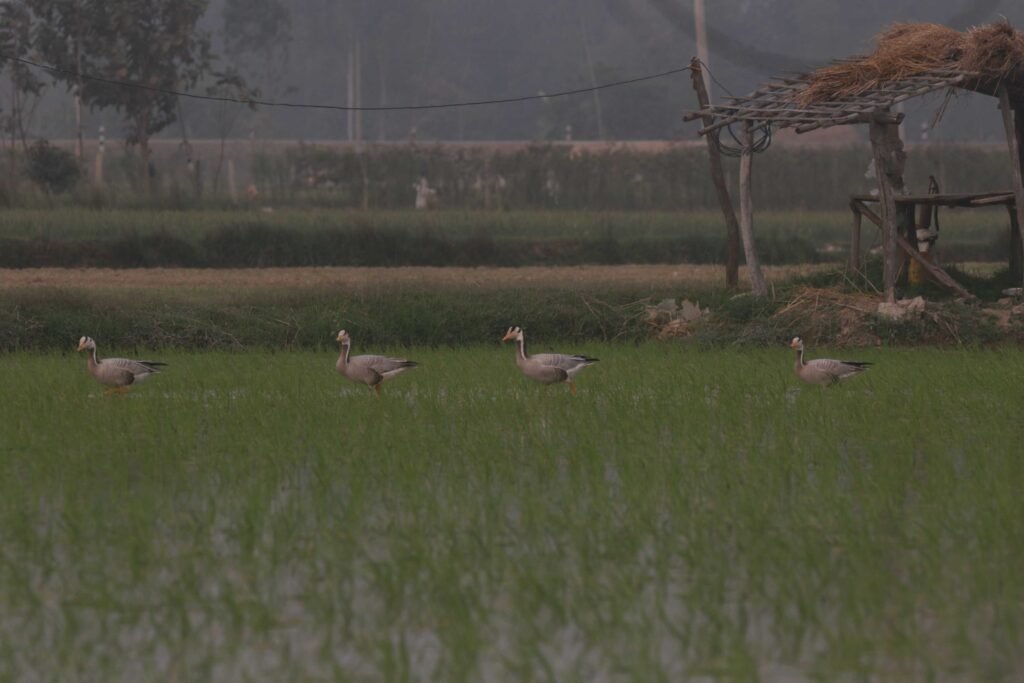
The Dhansuah area, like many parts of the greater Janakpur landscape, is characterized by a mosaic of agricultural fields, irrigation canals, and seasonal wetlands. While often overlooked, these habitats provide essential ecological services. The presence of Bar-headed Geese here highlights the role of such wetlands as critical refueling stations during migration.
During our observation, the geese were seen foraging in shallow water and adjacent fields, likely feeding on residual grains and aquatic vegetation. Their behavior suggested a period of rest and energy replenishment before continuing their northward migration.
Seasonal Transition and Migration Dynamics
This time of year represents a transitional phase in the migratory calendar. Many winter visitors have already begun their return journey, and sightings of late-staying species like the Bar-headed Goose are becoming increasingly rare. Such observations are valuable, as they provide insights into migration timing, habitat use, and potential shifts due to climate variability.
The Dhansuah sighting aligns with broader patterns observed across the Indo-Gangetic plains, where wetlands embedded within agricultural systems act as temporary sanctuaries for migratory birds.
Ecological Importance of Farmland Wetlands
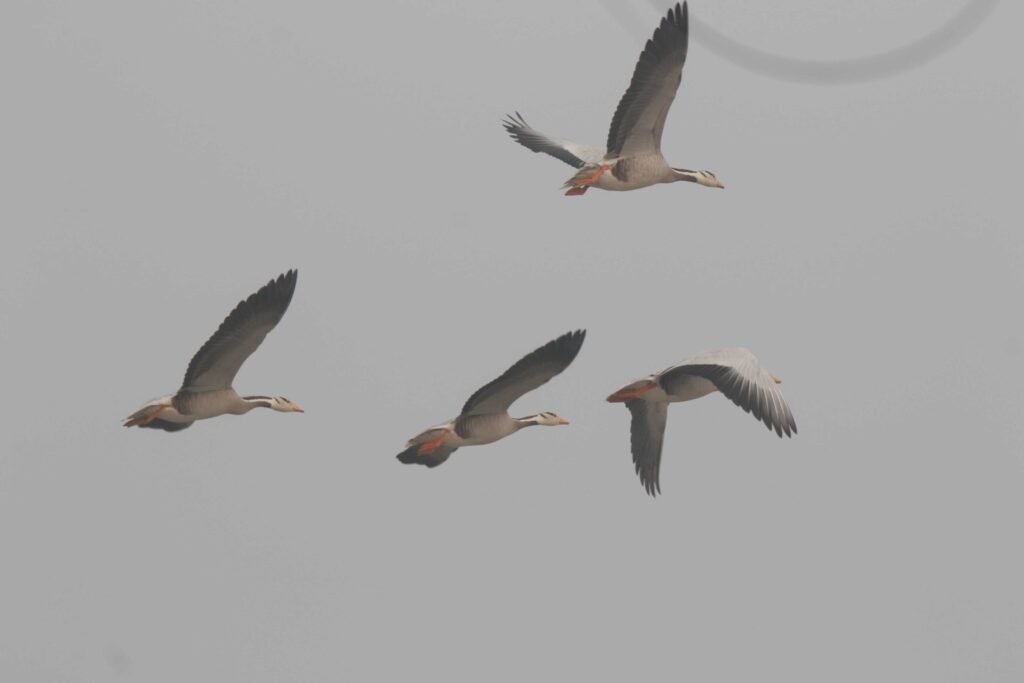
Farmland wetlands are often undervalued in conservation planning, yet they support a remarkable diversity of life. In regions like Madhesh Province, traditional farming practices inadvertently create habitats rich in food resources, grains, insects, and aquatic organisms that sustain both resident and migratory birds.
For species like the Bar-headed Goose, these landscapes are not merely incidental; they are essential. Without such stopover sites, the energetic demands of long-distance migration would be difficult to meet.
Moreover, the presence of these birds serves as a bioindicator of ecosystem health. Healthy wetlands support biodiversity, regulate water systems, and even contribute to agricultural productivity through natural pest control.
Conservation Concerns and the Way Forward
Despite their importance, farmland wetlands in the Janakpur region face increasing threats. Land-use changes, wetland drainage, pesticide use, and human disturbance are gradually degrading these habitats. The sighting of Bar-headed Geese in Dhansuah is both encouraging and cautionary. It reminds us of what still exists and what could be lost.
Conservation efforts must therefore focus on:
- Protecting seasonal wetlands from conversion and pollution
- Promoting bird-friendly agricultural practices
- Engaging local communities through awareness and citizen science
- Strengthening monitoring programs to document migratory trends
A Moment Worth Protecting
Encounters like this are more than just records in a field notebook; they are powerful reminders of the interconnectedness of ecosystems across continents. A bird that soars above the Himalayas finds refuge in a farmer’s field in Dhansuah. That connection is fragile, and its preservation depends on collective action.
NCRC remains committed to documenting such occurrences, fostering conservation awareness, and advocating for the protection of these vital landscapes. The wetlands and farmlands around Janakpurdham are not just local habitats; they are integral links in a global migratory network.