
Dhanusha is far more than a spiritual landmark; for a conservation biologist, it represents a critical ecological intersection where ancient history meets modern biodiversity. While the region is globally recognized for Janakpur and the legend of Lord Shiva’s bow, a cornerstone of the Ramayana, the environmental narrative is equally epic. The landscape is a complex tapestry of the Dhanushadam Protected Forest (DPF), traditional agricultural mosaics, and seasonal wetlands that act as a vital “pit stop” for migratory birds traveling the Central Asian Flyway.
The Green Fortress: Dhanushadam Protected Forest
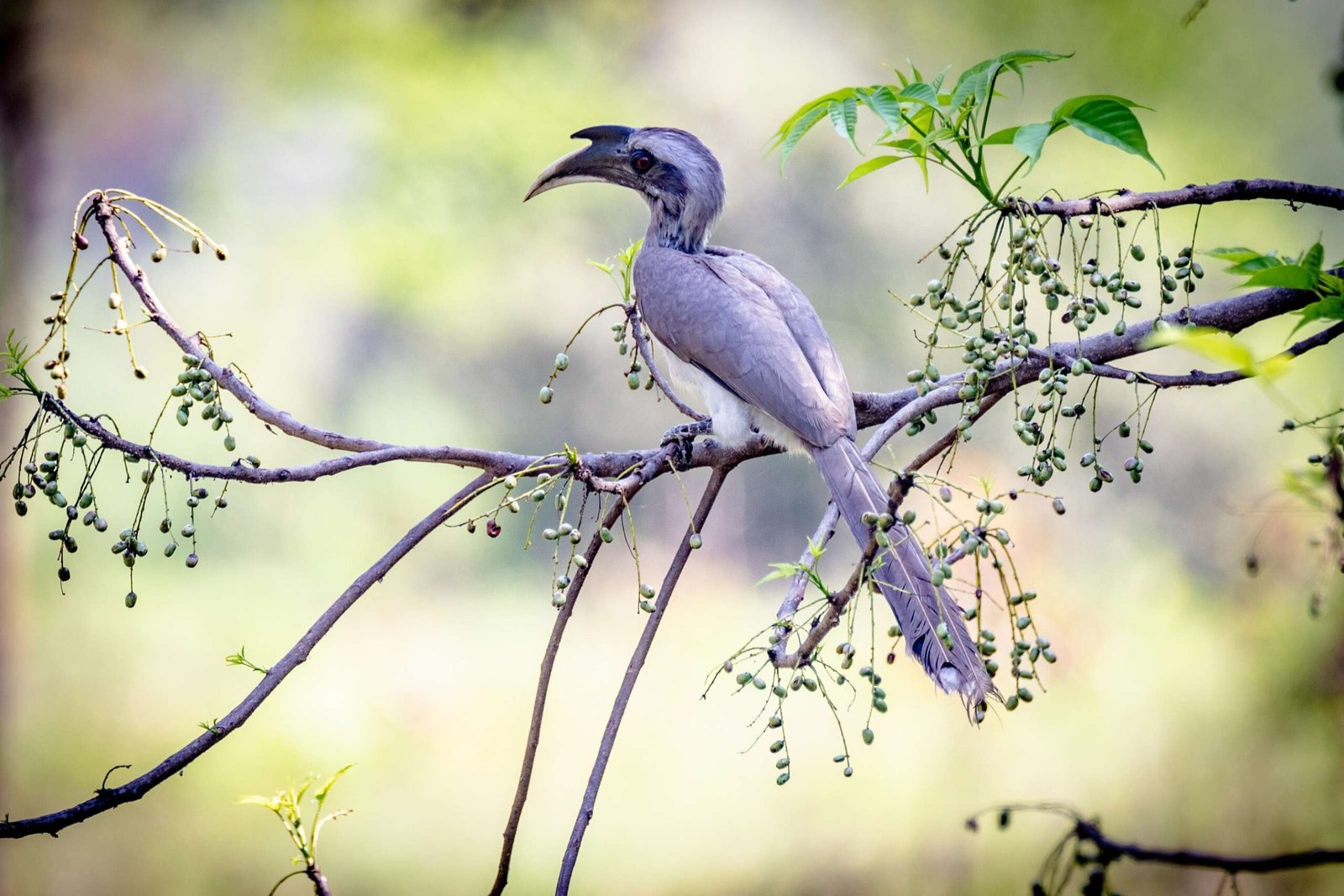
The Dhanushadam Protected Forest serves as the biological heart of the district. As one of the remaining remnants of the Terai’s lowland forests, it provides a multi-storied habitat for diverse avian guilds. In the high canopy, the Indian Grey Hornbill and various Woodpeckers act as primary architects, creating cavities that support a whole host of secondary nesters. During the summer, the forest’s acoustic profile is dominated by the Asian Koel, whose presence is a fascinating study in brood parasitism within the local crow populations.
The forest also serves as a critical lookout for majestic raptors. It is not uncommon to see the Himalayan Griffon or the critically endangered White-rumped Vulture soaring on thermals above the treeline. These scavengers are vital for the ecosystem’s health, and the DPF provides them with one of the few safe havens away from heavy human encroachment, though they remain vulnerable to regional environmental pressures.
The Agricultural Mosaic: Life in the Farmlands
Stretching outward from the protected forest are the associated farmlands, which are often undervalued in conservation but are, in fact, “working landscapes” for birds. These fields are a primary foraging ground for the Lesser Adjutant and the Woolly-necked Stork, both of which are listed as Vulnerable or Near Threatened. These storks can often be seen stalking through the furrows alongside the Black-headed Ibis and Red-naped Ibis, hunting for insects and small amphibians unearthed by traditional plowing.
Perhaps most significant is the presence of the Yellow-breasted Bunting in the grasslands and cereal crops. This species has faced a catastrophic global decline, making the Dhanusha farmlands a site of international conservation importance. Joining them are the Yellow-wattled Lapwing, distinguished by its striking facial features, and the Grey Francolin, which thrives in the scrubby margins where the fields meet the forest. These birds rely on the low-intensity farming practices that have defined the Mithila region for centuries.
The Pulse of the Wetlands: Migrants and Residents
Water is the lifeblood of Dhanusha, and its network of ponds and seasonal marshes supports an incredible array of wetland-dependent species. In the winter, the “honking” of the Bar-headed Goose, famous for crossing the Himalayas at extreme altitudes, can be heard as they settle into the local water bodies. They are often joined by the Ruddy Shelduck and the Lesser Whistling Duck, creating a vibrant spectacle for any observer.
In the quieter, reed-fringed areas, the elusive Black Bittern and the Bluethroat find cover. The Oriental Darter, often called the “Snakebird” due to its long, slender neck, can be seen drying its wings on partially submerged logs after a dive. These wetlands also support the Cotton Pygmy Goose and the Asian Openbill, the latter of which possesses a specialized beak designed to pry open the snails that thrive in these warm, nutrient-rich waters.