
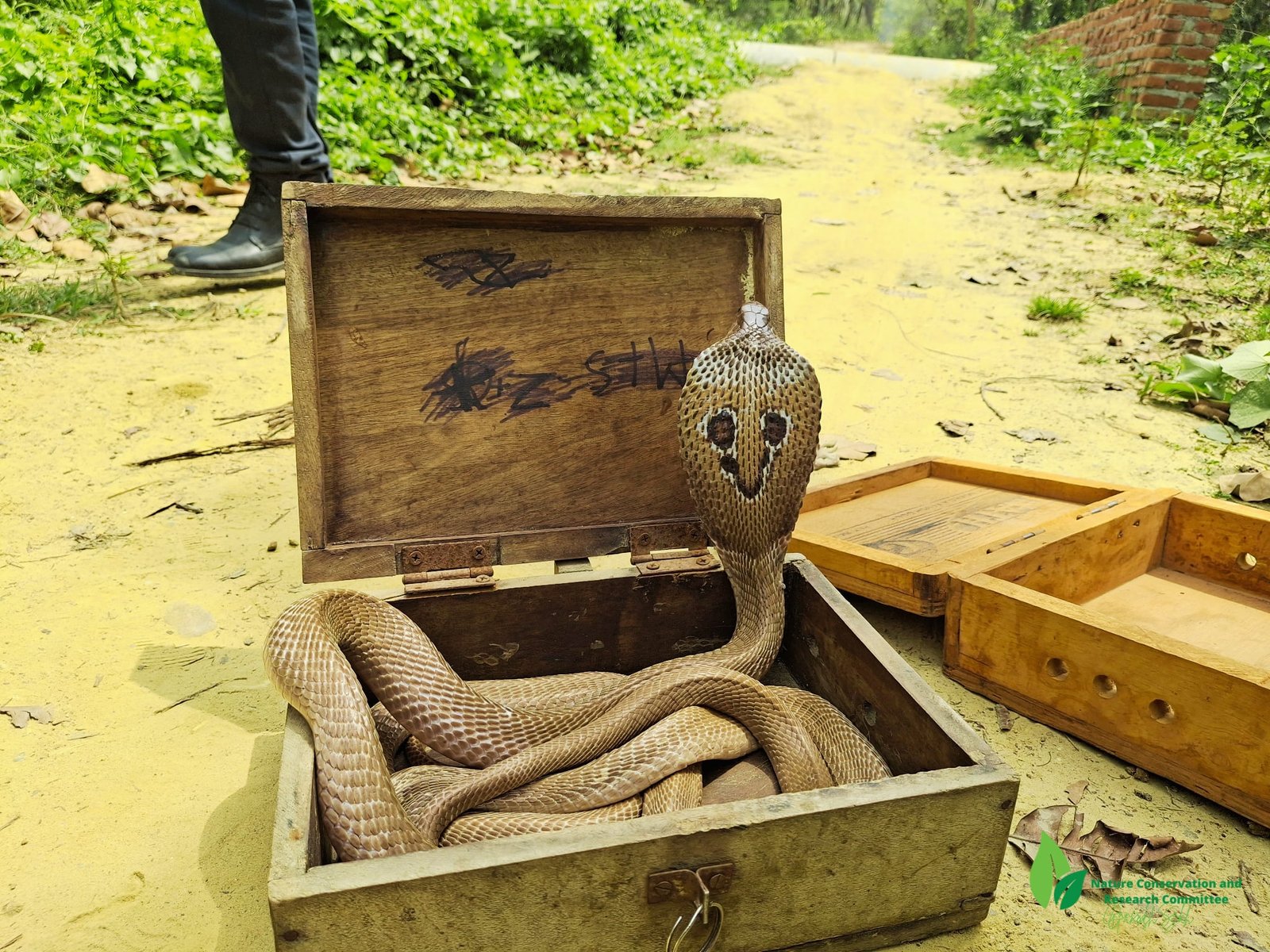
Wildlife crime in Nepal often unfolds quietly, embedded within everyday scenes, normalized by tradition, and overlooked by many. Yet behind these seemingly ordinary acts lie profound suffering and irreversible ecological consequences. A recent incident in Dhanushadham Municipality exposes this hidden reality and underscores the urgency of community vigilance and coordinated conservation action.
Incident Overview
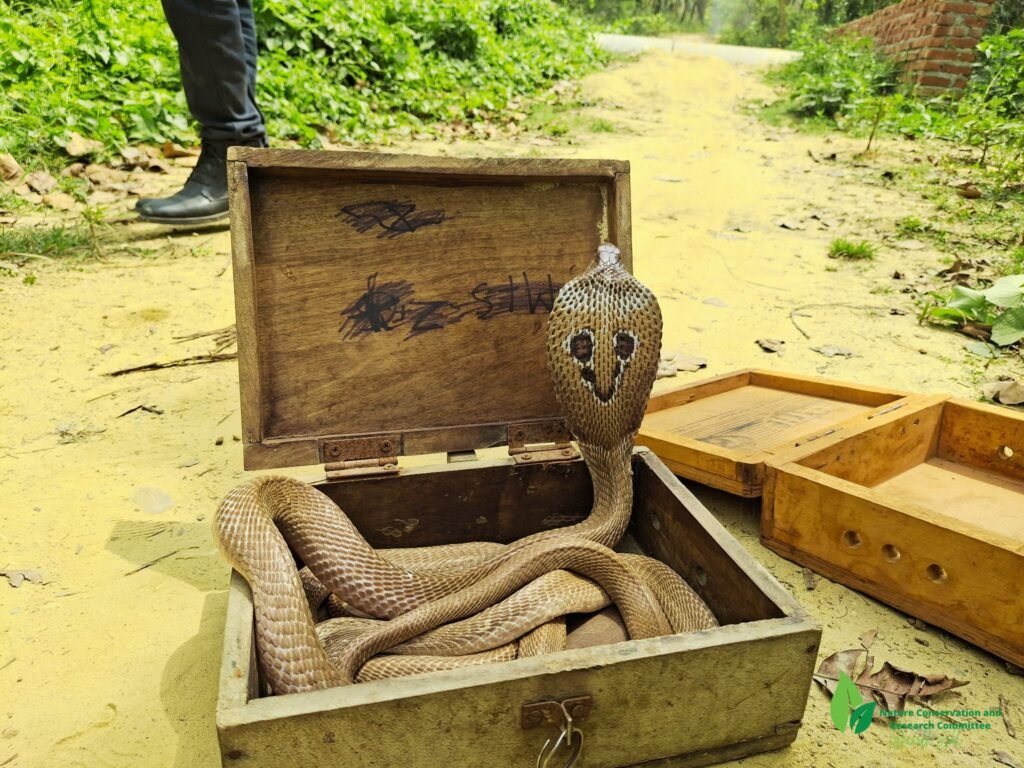
In Kishanpur Village, local residents reported that a snake charmer publicly displayed and handled a live Spectacled Cobra. While often perceived as cultural entertainment, such practices represent a serious violation of wildlife protection laws and pose risks to both human safety and animal welfare.
Responding swiftly, the NCRC team coordinated with the Divisional Forest Office, Dhanusha. Under the direction of Divisional Forest Officer Shankar Narayan Jha and with field support from Forest Guard Akash Yadav, a joint rescue operation was mobilized.
The Rescue Operation
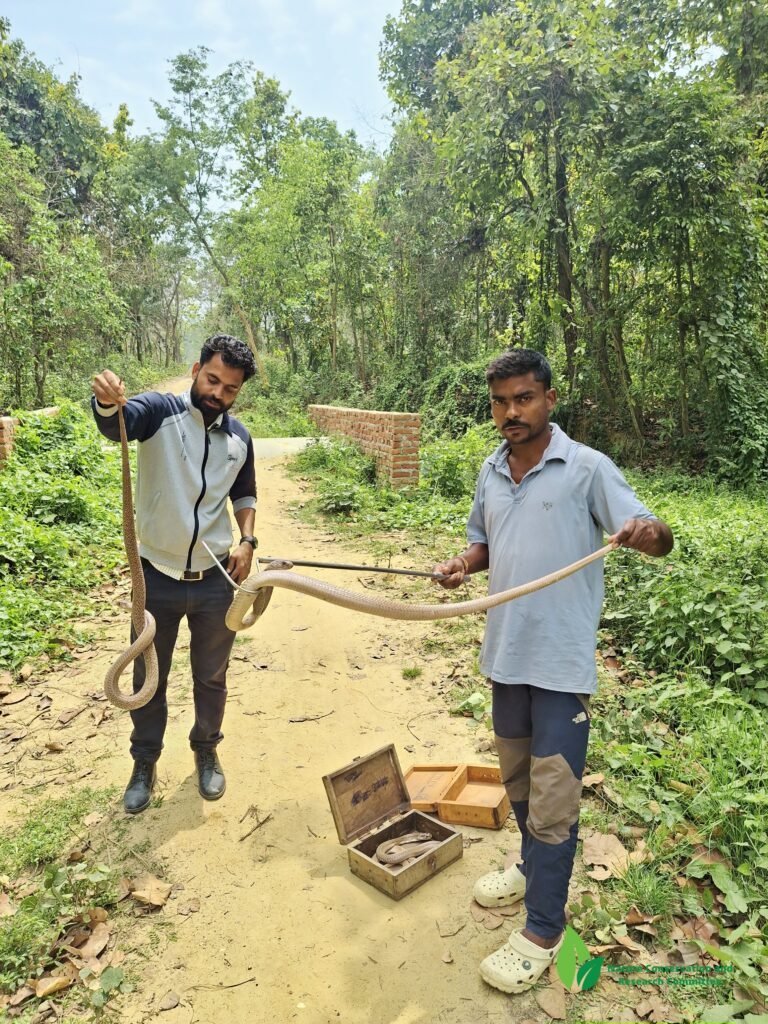
Through careful handling and adherence to established rescue protocols, three adult cobras were safely recovered. Every step was prioritized to minimize stress and injury to the animals while ensuring human safety.
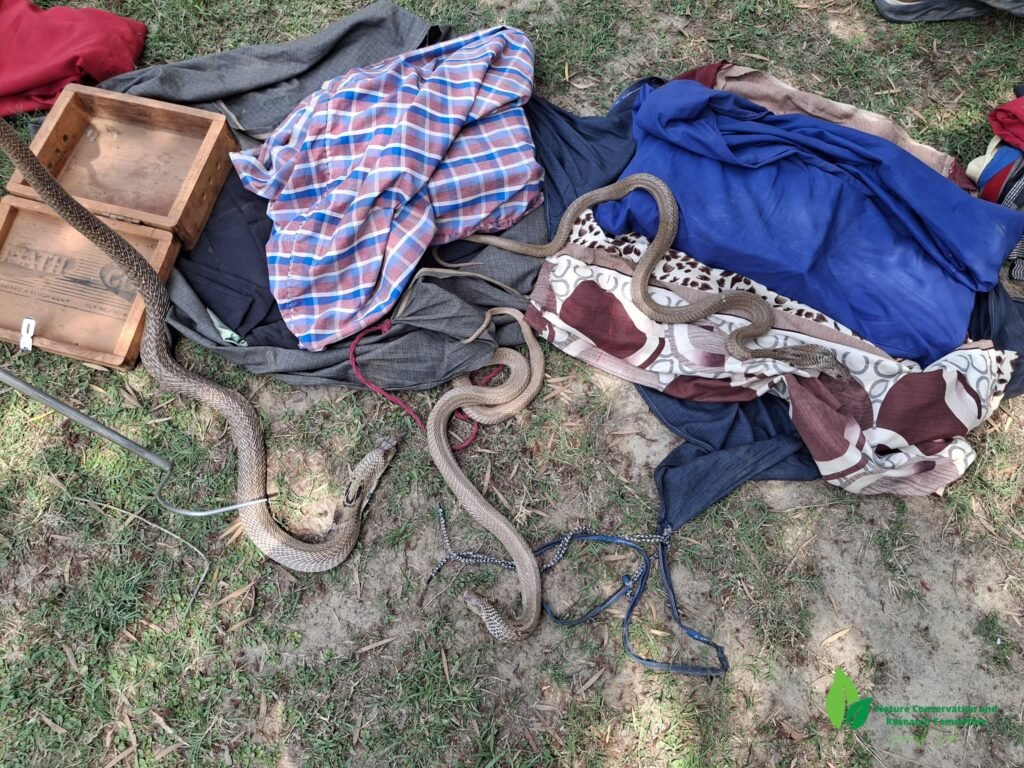
Following the rescue, the snakes underwent:
- Immediate health assessments
- Proper documentation and legal processing
- Temporary safe containment under expert supervision
Once deemed fit for release, all three individuals were returned to suitable habitat within the Dhanushadham Forest, restoring them, at least partially, to the wild where they belong.
The Hidden Cruelty Behind Snake Charming
What emerged during the intervention was deeply disturbing.
The snake charmer revealed that the cobras had been subjected to deliberate mutilation:
- Their fangs had been broken or forcibly removed.
- Given the direct connection between fangs and venom glands, this process inflicts severe pain and lasting physiological damage.
- Unable to strike or subdue prey, the snakes are effectively condemned to starvation.
These animals, already weakened and stressed, are typically kept for only 2–3 months. Beyond this period, most succumb to malnutrition, infection, or trauma. What is often presented as cultural performance is, in reality, a slow and silent death sentence.
Legal Context: Wildlife Crime in Nepal
Under the National Parks and Wildlife Conservation Act 1973, all native snake species, including the Spectacled Cobra, are legally protected.
The law strictly prohibits:
- Capture or killing of wildlife.
- Unauthorized captivity
- Use of wild animals for entertainment
- Trade or transport without permits
The actions observed in this case capture, mutilation, forced display, and deprivation constitute clear wildlife offenses, punishable by fines, imprisonment, or both.
Why Community Awareness Matters
This rescue was made possible because local community members chose to act. Their awareness and willingness to report illegal activity were decisive.
Effective conservation depends not only on laws and institutions, but on people. Communities serve as the first line of defense against wildlife crime. Strengthening awareness can:
- Prevent exploitation before it escalates.
- Protect vulnerable species
- Foster coexistence rooted in respect rather than domination
The rescue of these three cobras is more than an isolated success it is a stark reminder of the persistent threats facing wildlife in Nepal. Illegal practices like snake charming continue to erode biodiversity while inflicting immense suffering on individual animals.
Organizations like NCRC remain committed to:
- Wildlife rescue and rehabilitation
- Public education and outreach
- Collaboration with enforcement agencies
- Advocacy for humane and ethical treatment of wildlife
But lasting change requires collective responsibility.
If you witness wildlife abuse or illegal activity, report it. Speak up. Act.
Because conservation is not only about saving species—it is about defending the dignity of life itself.