
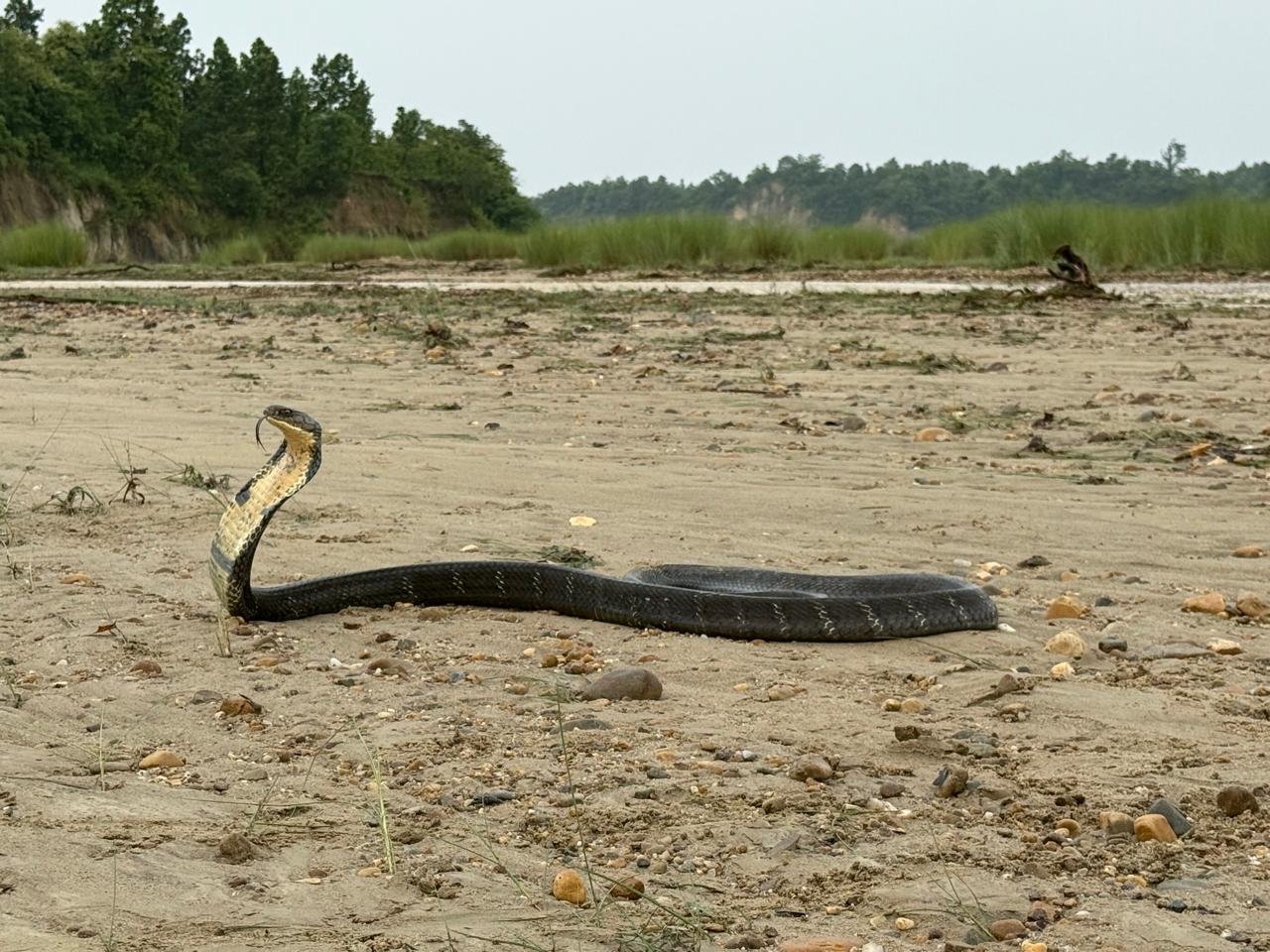
On September 6, a remarkable wildlife rescue took place in Dhalkebar, Dhanusha district, when a giant King Cobra (Ophiophagus hannah), locally known as राज गोमन (Raj Goman), was safely rescued from a residential area near Binayak School. The snake had entered a house and taken shelter in the roof, prompting concern among local residents. Despite several attempts to drive it away, it remained in hiding until help arrived.
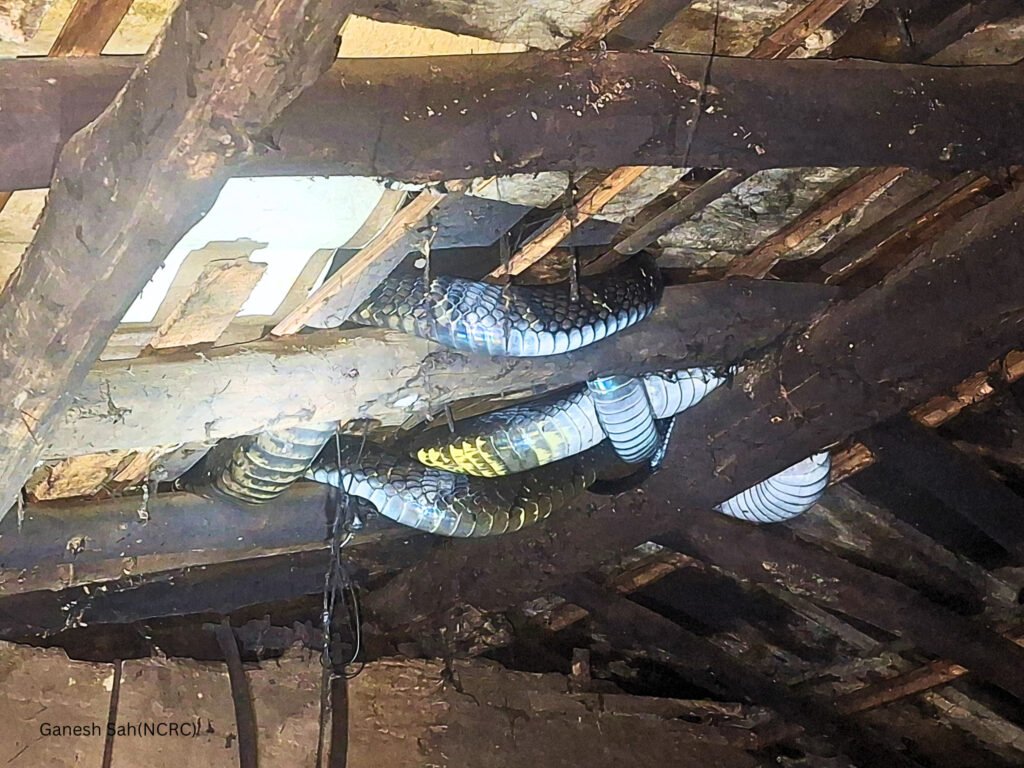
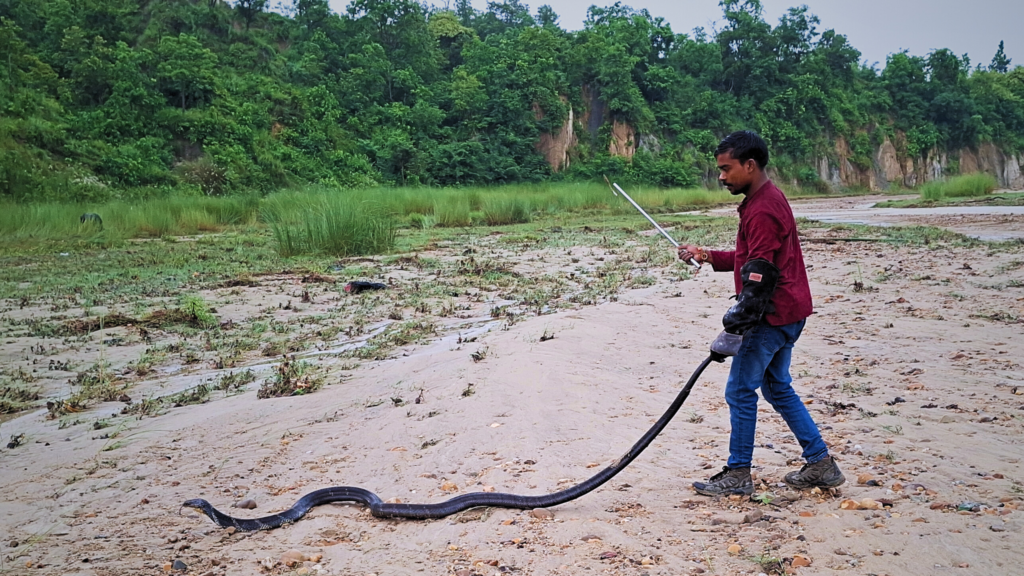
At around 1:00 AM, our dedicated team members Mr. Ganesh Sah and Mr. Avinash Mandal reached the site to find a large crowd gathered to witness the incident. Recognizing the potential danger, they immediately ensured that bystanders were kept at a safe distance before beginning the rescue operation. Using proper safety equipment and careful handling techniques, the team successfully captured the King Cobra without harm to either the snake or the people present. Following the rescue, they conducted a brief awareness session for local residents, explaining the ecological importance of snakes—especially King Cobras—and emphasizing the need to protect them rather than harm them.
The King Cobra (राज गोमन) is the world’s longest venomous snake, capable of reaching lengths over 18 feet. Revered in many cultures, this species plays a critical ecological role by regulating snake populations, as its primary diet consists of other snakes. Despite its formidable reputation, the King Cobra is generally shy and prefers to avoid human conflict. In Nepal, sightings of King Cobras are rare, and their presence is an indicator of a healthy forest ecosystem, especially in the Chure and Tarai regions. Protecting this majestic species is essential for maintaining ecological balance and biodiversity.
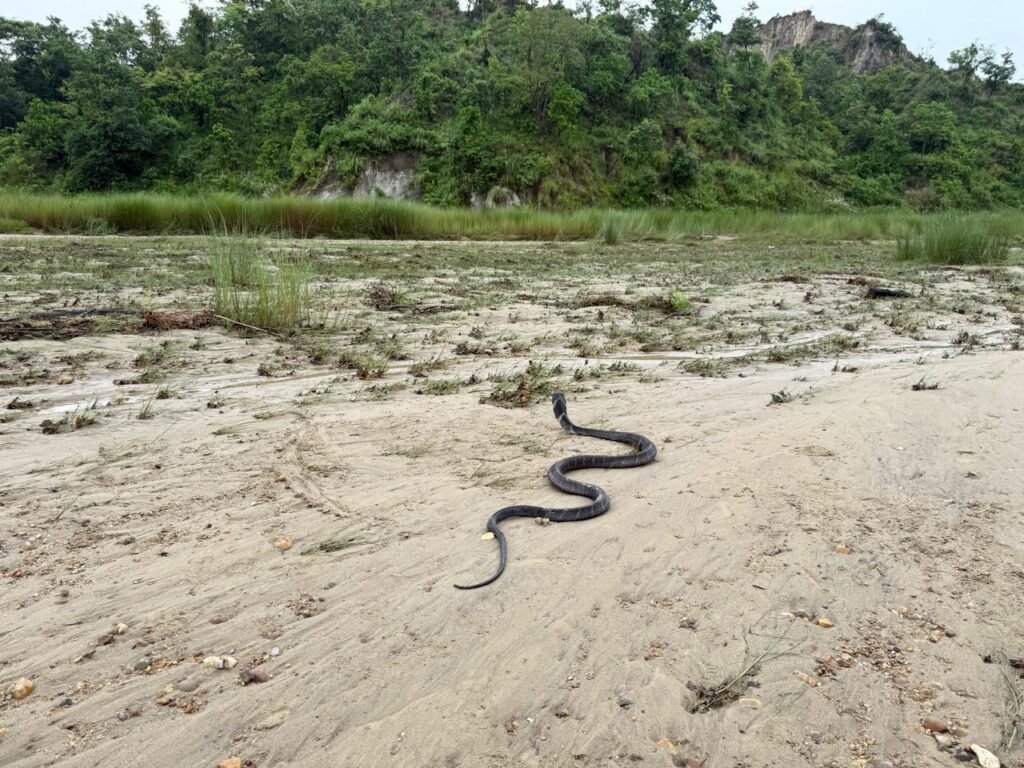
As it was late at night, the rescued King Cobra was kept safely until the following day. On September 7, it was released into its natural habitat at the Chure forest area above Pokharia–Damari (Pokharia Damar Community Forest User Group) near Dhalkebar. This particular individual measured approximately 14 feet in length and weighed about 14 kilograms, making it an exceptionally large and rare specimen for the region. According to local residents, the last sighting of such a large King Cobra in the area was 5–7 years ago, making this rescue especially significant for biodiversity monitoring.
We extend our sincere gratitude to our colleagues from the Nature Conservation and Research Committee—Mr. Avinash Mandal, Mr. Rajendra Mandal, Mr. Aditya Pal, and Mr. Manish Sah—as well as the local youths who assisted during the operation. This successful rescue and release would not have been possible without their teamwork, dedication, and community support. This event not only highlights the importance of wildlife rescue efforts but also underscores the need for greater awareness about the coexistence of humans and snakes in Nepal’s biodiverse regions.